Author: Simplee Bree

  • Navigating Attraction: The Good-on-Paper Dilemma in Modern Dating

    Navigating Attraction: The Good-on-Paper Dilemma in Modern Dating

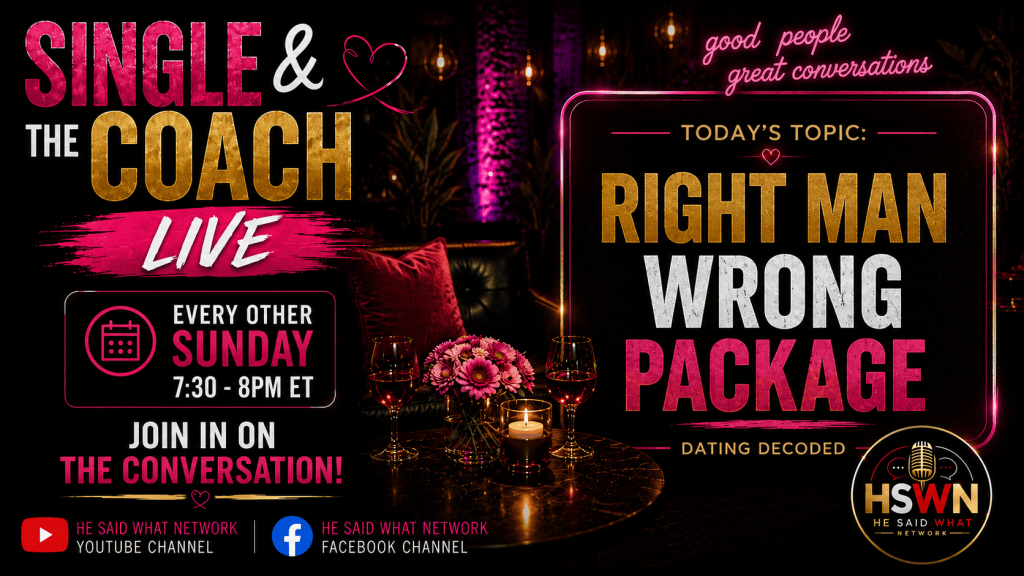
    In today’s dating landscape, many individuals find themselves in a conundrum: how to reconcile the qualities they desire in a partner with the physical attraction they feel. This week, we dive into a thought-provoking discussion sparked by a recent episode of Married at First Sight. A contestant named Nikki faced this very dilemma when matched with a gentleman who checked all her boxes but left her wanting in the attraction department.
    Understanding the Good-on-Paper Phenomenon

    The concept of a “good-on-paper” partner refers to someone who possesses the ideal attributes — education, values, career, and personality traits — yet fails to ignite that crucial spark of physical attraction. In Nikki’s case, she was paired with a man who met all her expectations but just wasn’t her type physically. This raises the question: how important is physical attraction in a relationship, especially when other aspects seem perfect?

    The Importance of Physical Attraction

    • Chemistry vs. Compatibility: While compatibility covers shared values and goals, chemistry often hinges on that initial spark. It’s essential to understand that both elements play critical roles in forming a sustainable relationship.
    • Long-term Effects: Studies have shown that physical attraction can fade over time, but if it’s absent from the start, can a relationship thrive? Couples often need a foundation of attraction to withstand challenges.

    The Role of Matchmakers and Expectations

    As a matchmaker, the goal is to pair individuals with potential partners who align closely with their desires. However, as Ty pointed out, no matchmaker can guarantee that every aspect will align perfectly. When making a match, there’s always an element of risk involved.

    What Matchmakers Can Do

    • Close Enough: They aim to provide matches that closely resemble what individuals seek. In Nikki’s case, the matchmakers delivered on many fronts — values, education, and lifestyle — but fell short in the realm of attraction.
    • Setting Realistic Expectations: It’s crucial for clients to understand that while they may have a checklist, love doesn’t always fit neatly into that criteria.

    Exploring the Dilemma: What Should You Do?

    If you find yourself in a situation similar to Nikki’s, what can you do? Here are some actionable insights:

    • Evaluate What Matters Most: Prioritize the qualities you value in a partner. Is physical attraction non-negotiable, or can it develop over time?
    • Consider Personal Growth: Sometimes, attraction can grow as you engage with someone on a deeper level. Give yourself the opportunity to explore those feelings.
    • Open Communication: If you’re unsure about your feelings, communicate openly with your partner. Discuss what you appreciate about them, and explore if attraction can evolve.

    Conclusion and Takeaways

    Navigating the complexities of attraction is a common issue in modern dating. The key takeaway is that while having a partner who is good on paper is essential, don’t underestimate the importance of that initial spark. A fulfilling relationship often requires a blend of chemistry and compatibility. If you find yourself struggling with this balance, take the time to reflect on your priorities and remain open to the possibilities that come your way.


    Frequently Asked Questions

    What does it mean to be a “good-on-paper” partner?
    A “good-on-paper” partner refers to someone who meets all the desired qualities in terms of values, education, and personality but lacks the physical attraction that one might seek in a romantic relationship.

    How important is physical attraction in a relationship?
    Physical attraction plays a significant role in the initial stages of a relationship and can be vital for long-term compatibility. However, emotional and intellectual connections can also foster attraction over time.

    Can attraction grow over time?
    Yes, attraction can develop as individuals get to know each other better and build a deeper emotional connection. It’s essential to allow space for this growth in a relationship.

    Have you ever met the ‘perfect on paper’ person and felt nothing? What did you do?

    — Bree

    P.S. If this stage of life feels familiar, I share more every week on YouTube — subscribe to 40’s Somethings 🤎
  • Following Your Bliss Crumbs: My Conversation with Kathy Stowell

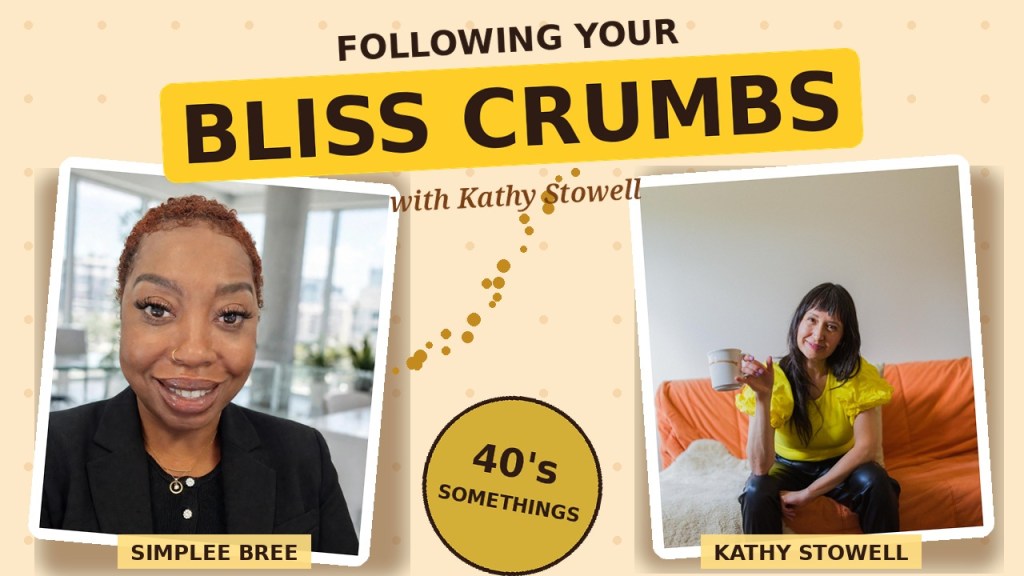
    Following Your Bliss Crumbs: My Conversation with Kathy Stowell

    Somewhere between raising a family and keeping everything running, a lot of us quietly lose track of what we actually like.

    Not what the kids need. Not what the house needs. What we like.

    That is exactly where my conversation with Kathy Stowell starts. Kathy is the founder of Bliss Beyond Naptime, and she teaches something I have not been able to stop thinking about since we talked: bliss crumbs — the small, almost-too-easy moments that light you up a little. A song. A walk. Ten quiet minutes with coffee that is still hot. Kathy says you do not have to plan a whole new life. You follow the crumbs.

    Where “bliss crumbs” came from

    Kathy told me the idea first showed up when she was pregnant with her daughter, in the form of cravings — her body guiding her, almost like a flashlight, toward what it needed. (Her craving was corn on the cob. Six of them. In one day. No judgment here.) It made her realize our cravings are not just about food. They are information. As she puts it, when you tap into that — what is my soul craving? — it will not guide you wrong.

    Microdosing your bliss

    One of my favorite parts of our conversation: you do not need a major life overhaul. Kathy and I talked about microdosing bliss crumbs — putting one small thing on the calendar on purpose. Her example was a massage gift certificate she had been holding onto since last Christmas. Booking it, she said, was “a declaration of this is important to take care of my needs.”

    Start with the little things and work your way up. That is the whole assignment.

    “I honestly don’t know what I like anymore”

    We also took your questions, and this one stopped me in my tracks: “I get an evening to myself and I honestly don’t know what I like anymore. Where do you even start?”

    Kathy’s answer is an exercise so simple I am doing it tonight: put on one of your favorite songs, and for the length of that song, brain-dump onto a blank page everything that sounds fun to you — no overthinking, be silly, be audacious. Then circle the ones you could actually do tonight.

    We also talked about the identity shift when the kids don’t need you the same way anymore (yes, it’s normal — and no, you don’t have to hate the freedom), and about making friends as a grown woman. All of it is in the conversation.

    Watch the conversation

    If you are in your next-chapter era — kids getting older, time opening back up, and a woman in the mirror you are getting reacquainted with — this one is for you.

    Then come tell me in the comments: what is one bliss crumb you could follow this week?

    — Bree

    Find Kathy at BlissBeyondNaptime.com and on Instagram @blissedbeyondnaptime. Her podcast is Mom Coaches Getting Clients. Kathy is a certified Simplicity Parenting Coach and Kaizen Muse Creativity Coach.

    New here? Start with my free 40’s Somethings Starter Kit — the “Learning to Be Me Again” 7-day rediscovery journal: iamsimpleebree.com/starter-kit

  • Dating In Your 40s Hits Different

    Dating In Your 40s Hits Different

    Dating hits different when your child is older. Nobody told me that part.

    I’m not working around a little kid’s schedule anymore. No nap times, no rushing home. I get to actually be present — and I get to choose, not just fit somebody in.

    And I show up different now. In my 20s, I was trying to be picked. In my 40s? I’m a whole woman — a mother, yes, but also me. If it doesn’t bring peace, I’m not forcing it.

    My time is mine again, and I’m protective of it. That’s not being difficult. That’s being grown.

    I said it in this video — watch it here: https://www.youtube.com/shorts/vi1s-F9s2TM

    (It builds on my last one — “3 Things Changed When My Son Grew Up” — if you want the full picture.)

    Tell me: what’s the biggest difference YOU notice dating now versus back then — your standards, your time, or your peace? I read every comment. 🤎

    — Bree

    P.S. New videos go up on my YouTube channel, @IAmSimpleeBree — subscribe so you don’t miss the next one.

  • 3 Things Changed When My Son Grew Up

    3 Things Changed When My Son Grew Up

    Nobody warns you about this stage of motherhood. When your child gets older and more self-sufficient, things change — and nobody prepared me for any of them. Here are the three that hit me first.

    1. My time

    I used to plan my whole day around what he needed. Now there are hours in my day that are just… mine. At first that felt strange. A little empty, even — a little guilty, if I’m honest. Then I realized: this is the first time in years I’ve had time that’s actually mine.

    2. My focus

    For years it was mom first, everything else second. Now my dreams are getting louder again. The goals I put on hold? They’re back on the table — and I’m not apologizing for that.

    3. Dating

    It’s different when your child is older and has his own life. I’m not sneaking around a nap schedule anymore. I get to show up as a whole woman — not just somebody’s mama.

    I talked through all three in this video — watch it here: https://www.youtube.com/shorts/MP8mZTATuPI

    If you’re in this stage too, tell me: which one changed for you first — your time, your focus, or your love life? I’ll go first: time. It felt strange before it felt like freedom. Focus came next. The love life? She’s arriving in her own time. 🤎

    Tell me yours in the comments — I read them.

    — Bree

    P.S. New videos go up on my YouTube channel, @IAmSimpleeBree — subscribe so you don’t miss the next one.

  • I Was “Mom First” For Years — Now I’m Learning To Be Bree Again

    I Was “Mom First” For Years — Now I’m Learning To Be Bree Again

    For years, “Mom first” wasn’t just something I said — it was how I lived. My days, my time, my plans all started with what my son needed, and everything else about me fit in wherever there was room left. Most days, there wasn’t much room left.

    Then something shifted. He’s older now. More self-sufficient. He doesn’t need me in the same hands-on, every-minute way he used to — and nobody warns you about what that feels like for you.

    At first, the extra time felt strange. A little empty, even. When you’ve built your whole identity around being needed, quiet hours can feel less like freedom and more like a question: Okay… so who am I when I’m not just “Mom”?

    I’m learning the answer in real time. My focus is changing — the goals and dreams I put on hold are getting louder again. Dating looks different, too. I’m not working around a little child’s schedule anymore; I get to show up as a whole woman, in her 40s, who knows what she brings and what she wants.

    I won’t pretend I’ve got it all figured out. Some days rediscovering yourself feels exciting. Some days it feels lonely. Both can be true in the same week.

    But here’s what I know: this stage isn’t the end of something. It’s the beginning of me getting back to me — and I’m not apologizing for that.

    I talked about this in my newest 40’s Somethings video — watch it here: https://youtube.com/shorts/TtGJFp8usgg

    If you’re in this stage too, I want to hear from you: what changed first for you — your time, your focus, or your dating life? Tell me in the comments. I read them.

    — Bree

    P.S. New videos go up on my YouTube channel, @IAmSimpleeBree — subscribe there so you don’t miss the next one.